Uniform and a WhatsApp Forward
What I Saw:
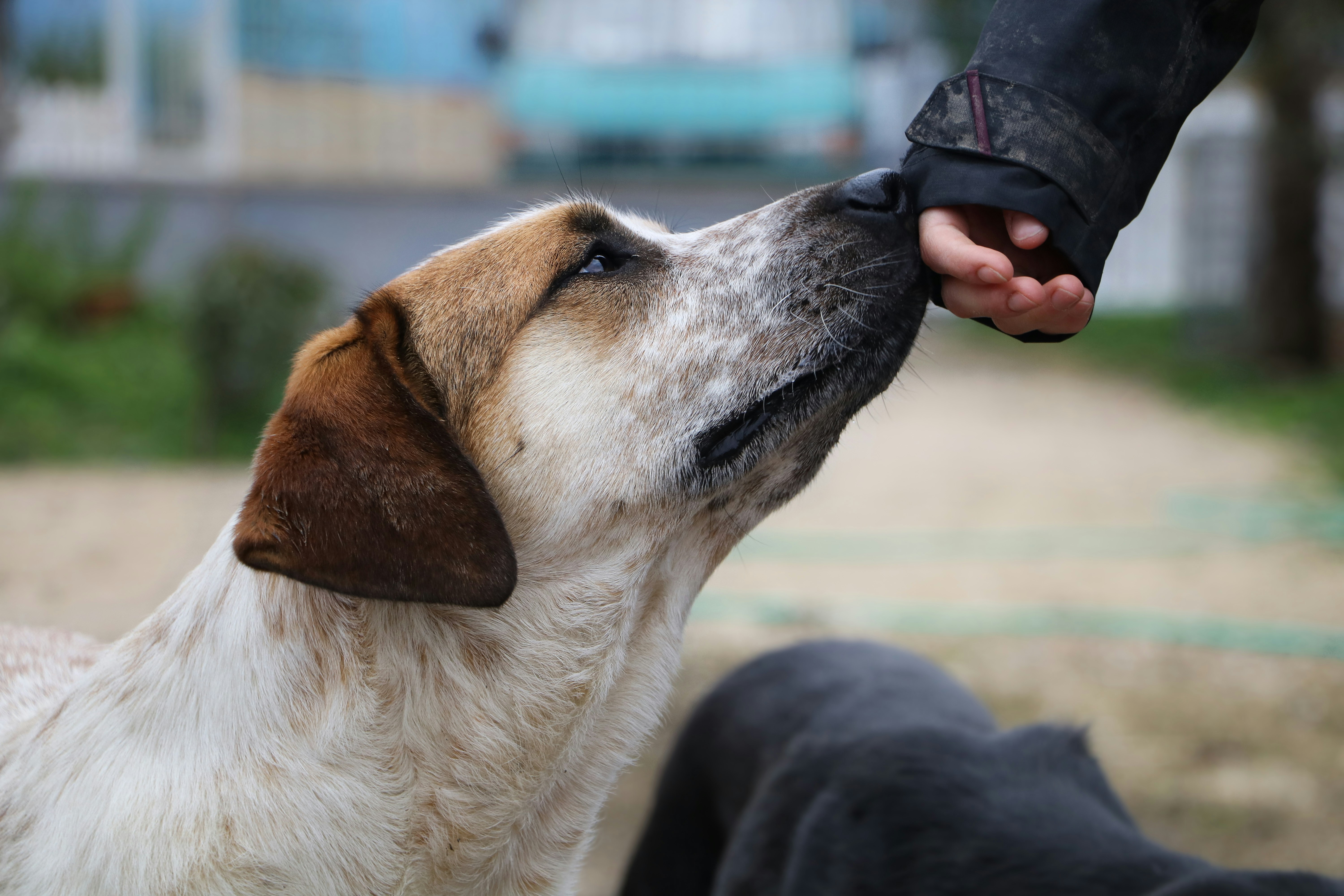
The Market: I was waiting for someone, watching the usual chaos of a busy day, vendors, shoppers, bikes weaving through gaps they had no business fitting through. Then a kid walked in. Couldn't have been more than fourteen, carrying himself the way kids do when they're just running a small errand, probably milk, maybe something for the house. With him was a small Husky, leashed, calm, completely unbothered by the noise around it.
There were police stationed at the market that day. Their job, as far as I could tell, was to keep the bike riders in check, the usual weekend crowd of teenagers who think a market lane is a racing track. Standard stuff. But one of them, a lady constable, had stepped away from her post and was mid-snack at one of the stalls.
That's when she noticed the boy.
What followed was the kind of scene that makes you stop and stare. She came at him like he'd committed something serious voice raised, posture aggressive, the full weight of a uniform behind her words.
"OYE! LADKE! Tujhe pta nhi h iss kutte ko market mein leke nhi ghum skta tu?"
The boy froze. Pointed toward a shop down the lane.
She wasn't done.
"Tujhe Supreme Court ki guidelines ka nhi pta?!"
He didn't argue. He didn't ask what guidelines. He just turned around and left, the way anyone would when someone in authority yells at them in public. He was in tears by the time he turned around. The constable, still unsatisfied, turned to the people around her: "Vapis bulao uss batameez ko, Mai dikhati hun isse guidelines saari." Nobody called him. He didn't come back.
And here's the part that stayed with me. Not one of her colleagues said a word. Not because they agreed with her. But probably because they knew she was wrong.
The Questions:
- Was the dog aggressive? No
- Was it scaring anyone? No
- Was it even near her? No, she walked up to him.
- Was the market private property with restrictions on animals? No, it's a public space.
- Was it on a leash? Yes.
- Did any of this have anything to do with the Supreme Court guidelines she cited? Not even remotely.
What Did the Supreme Court Actually Say?
On July 28, 2025, the Times of India published a report titled City Hounded by Strays, Kids Pay Price, highlighting stray dog attacks on children in Delhi. The Supreme Court took suo moto cognizance of this single news report and elevated it into a matter of constitutional significance. Within weeks, two sharply contrasting orders emerged: the first on August 11, directing permanent confinement of stray dogs in Delhi-NCR, and the second on August 22, which corrected course and reinstated the capture-neuter-vaccinate-release model, broadening the issue to a pan-India scale.
What the August 22 guidelines actually said, in plain terms:
Stray dogs are to be captured, sterilised, dewormed, and vaccinated under the ABC Rules 2023, then released back to the same locality. Dogs showing aggressive behaviour or infected with rabies must not be released and should be kept in shelters. Designated feeding zones must be created in every ward feeding on public roads is prohibited.
Every single one of these guidelines is about stray dogs. The case was named after a newspaper report about unvaccinated strays attacking children. The ABC Rules it references govern stray dog population control. The Prevention of Cruelty to Animals Act, 1960 which governs pet dogs exists to protect animals from human cruelty, not restrict a child from walking his leashed Husky to the market.
This was the ruling circulating in August 2025. This was what that constable had apparently interpreted as grounds to confront a fourteen year old and his Husky in a public market.
The Gap:
The Supreme Court was responding to a crisis of unvaccinated, aggressive stray dogs attacking children on public streets. The guidelines were specific, the context was clear, and the target was equally clear: stray dogs posing a public health risk.
A leashed, pet Husky does not appear anywhere in that picture. Not in the ABC Rules. Not in the August 22 order. Not in the Prevention of Cruelty to Animals Act. Nowhere.
What that constable cited as legal authority had nothing to do with what she was enforcing. The guidelines existed, the misinterpretation was hers, and the consequence was the boy walked away not knowing either existed.
The Gap, Again:
She didn't need anything more than a uniform and a raised voice to take away that kid's evening.
This is the part that stays with me. Not the misinterpretation itself people misread things, that's human. What unsettles me is the confidence. She wasn't uncertain. She wasn't checking. She was certain enough to yell, certain enough to chase, certain enough to demand he be brought back so she could educate him on guidelines she clearly hadn't read.
That confidence doesn't come from training. It comes from a WhatsApp forward that sounded official enough, absorbed quickly, never questioned, and then deployed with the full weight of a uniform behind it. In a country where legal literacy is low and institutional authority is rarely challenged, especially by a fourteen year old alone in a market that combination is quietly dangerous.
Her colleagues said nothing. Not because they were indifferent, but because they probably knew. They let it happen anyway. That silence is its own kind of problem.
The boy didn't know his rights. The constable didn't know the law. And somewhere in that gap, a perfectly ordinary afternoon got derailed by confident ignorance in a position of power.
This is not an isolated incident. It happens in markets, in housing societies, at school gates, in government offices. Authority plus misinformation plus someone who won't push back the equation produces the same result every time.
I observe things that don't add up. This one didn't add up at all.